
Every child has the right to be educated, grow, and create a better life for himself/herself. Low-income children face challenges in getting the materials needed for their education. Materials such as notebooks, pencils, school bags, and textbooks may seem simple, but they play a crucial role in a child’s learning process. Without access to these simple items, it is much harder for a student to understand what is being taught in class and finish their homework.
Providing school supplies for disadvantaged children provides a simple method of supporting their educational experience. From simple stationery products to suitable reading materials and artistic supplies, the right supplies will provide children with the confidence to actively participate in class activities. Happy Faces Vadodara is a child NGO in Vadodara that offers a significant component of the mission at Happy Faces Vadodara to assist children and provide enhanced opportunities within the local community.
Why Are School Supplies Important for Underprivileged Children?
School supplies help students participate in day-to-day classroom activities. Notebooks give students a place to practice writing skills. Pencils allow students to complete classroom work. Textbooks enable children to understand the curriculum. School supplies provide children with the opportunity to become self-reliant learners and study for tests.
When families cannot afford necessary school supplies, their children will likely be forced to share supplies with others, use damaged supplies again, or use no supplies at all. If schools provide families with appropriate educational supplies, it will be easier for them to overcome these challenges and provide their students with a better learning experience.
The act of giving a child a school kit may help him/her prepare for his/her first day at school. Children with all of the necessary supplies are able to concentrate better on learning, ask questions, and build new abilities.
What School Supplies Do Underprivileged Children Need Most?
The most useful supplies depend on a child’s age, class, and school requirements. However, the following items are a good starting point when planning a stationery donation for poor students.
1. Notebooks and Writing Materials
Notebooks are among the most essential school supplies for children. Students use them to write notes, solve mathematics problems, complete homework, and practice lessons.
Useful writing materials include:
- Ruled notebooks for language subjects
- Unruled notebooks for drawing and activities
- Pencils and erasers
- Pencil sharpeners
- Blue or black pens for older students
- Rulers for everyday classroom work
A set of notebooks and stationery can help a child participate in lessons without worrying about running out of basic materials. Donors should consider the number of subjects a child studies when selecting notebooks.
2. School Bags
A durable school bag helps children carry their books, notebooks, lunch boxes, and stationery safely. It also keeps their educational materials organized and protects them from everyday wear and tear.
When choosing school bags for children in need, look for lightweight designs, strong zips, comfortable straps, and enough space for essential books. The bag should be suitable for the child’s age and size.
A good-quality school bag is a useful part of a school kit donation because it can support a child’s daily school routine for an extended period.
3. Textbooks and Storybooks
Books give children access to information, new ideas, and opportunities to improve their reading skills. Textbooks help students understand classroom lessons, while storybooks encourage imagination, vocabulary development, and a love of reading.
Donors can consider providing:
- Age-appropriate textbooks and workbooks
- Reading books in familiar languages
- Picture books for younger children
- Dictionaries and basic reference books
- Practice books for reading, writing, and mathematics
When donating books, check that they match the child’s class level and curriculum wherever possible. Clean, gently used books in good condition can also be valuable educational materials for children.
4. Geometry Boxes and Mathematics Supplies
The higher a child goes in school, the more they will need additional materials to succeed in math and other subjects. These materials include geometry sets, rulers, and other measuring tools. These tools help children complete classroom assignments and learn the fundamental concepts of mathematics.
Useful items include:
- Geometry boxes
- Rulers and measuring scales
- Pencils and erasers
- Graph notebooks
- Basic calculators, where permitted by the school
These supplies are particularly helpful for students who need to complete geometry, measurement, and graph-based activities.
5. Art and Creative Learning Materials
Education is not limited to textbooks and written examinations. Drawing, colouring, and creative activities help children express themselves, develop coordination, and learn through practical experiences.
Consider giving crayons, colored pencils, drawing books, sketching pens, safety scissors (for kids), glue sticks and craft paper. These supplies are used for art classes, school projects, and group learning activities.
For younger children, age-appropriate learning resources such as picture cards, puzzles, and simple counting materials can also make lessons more engaging.
6. School Essentials for Older Students
Students in higher classes may require additional educational resources to prepare for examinations and complete subject-specific work.
Depending on school requirements, useful supplies may include:
- Subject-specific notebooks
- Examination pads and writing instruments
- Reference books and practice guides
- Folders for organizing notes
- Scientific calculators, where permitted
- Drawing instruments for technical subjects
Providing these resources can help older students organize their studies and prepare for future educational opportunities.
How Can You Organize a School Supplies Donation?
A meaningful donation begins by knowing exactly what the children require. Donors may use a simple collection drive rather than gathering random items and provide appropriate materials to the specific students who require those items.
Step 1: Identify the requirements. Speak with an NGO, school, or community organization to understand which supplies are needed most.
Step 2: Prepare age-appropriate kits. Group essential stationery, notebooks, and other learning materials according to the children’s classes and requirements.
Step 3: Check the quality. Ensure that donated items are clean, safe, complete, and ready to use. Avoid damaged stationery and books with missing pages.
Step 4: Coordinate distribution. Work with an organization that understands the local community and can help direct donations to children who need them.
Step 5: Encourage regular support. The items used at school will be needed during the entire school year. Donations of additional supplies can provide students with replacement supplies such as notebooks, pencils, and other essential learning materials as needed.
These steps can make a school supplies donation more organized, useful, and sustainable.
Learn how donation drives in Vadodara support community well-being by providing essential resources and helping those in need.
How Happy Faces Vadodara Supports Children’s Education
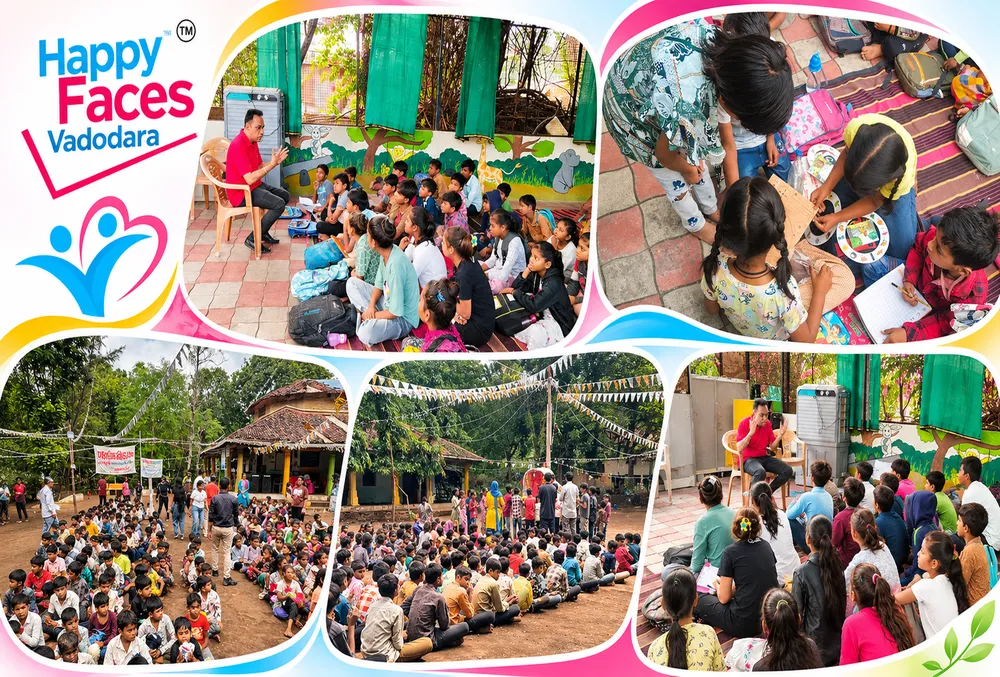
Happy Faces Vadodara creates positive changes by supporting its community and providing educational opportunities. The organization has street schools and provides free education to students who come from disadvantaged areas.
Through its education initiatives, Happy Faces Vadodara aims to give children better opportunities to learn and develop their skills. Its street school activities help make learning more accessible to children who may face financial and social barriers.
Supporting children’s education involves more than providing stationery. It also means encouraging regular learning, creating opportunities for development, and helping children build confidence in their abilities.
Individuals, schools, and corporate organizations can contribute by supporting educational initiatives, participating in donation drives, or volunteering their time and skills. Such efforts can help strengthen community education and give children access to resources that support their development.
How Can You Help Underprivileged Children Continue Learning?
You do not need to make a large contribution to make a difference. Even a small collection of notebooks, pencils, and other essential supplies can help meet a child’s everyday learning needs.
You can contribute by organizing a stationery donation for poor students, collecting suitable books, or arranging a school kit donation with friends, colleagues, or your organization. Businesses can also support educational activities through community outreach and corporate social responsibility initiatives.
If you want to support children’s education, consider contributing to initiatives that work directly with children and understand their learning requirements. You can also visit the Happy Faces Vadodara website to learn more about its work and ways to get involved or to donate for causes that help children learn.
Donating to charities supporting education is another method to provide an opportunity for children in economically disadvantaged areas to receive a quality education. By working together as individuals and organizations, we can make available those basic educational materials that are so necessary to facilitate learning.
Conclusion
School bags, notebooks, pencils, textbooks, geometry boxes, and creative learning materials are among the most useful supplies for underprivileged children. These everyday items help students participate in classroom activities, practice their skills, and approach their education with greater confidence.
Providing school supplies for underprivileged children is a simple but meaningful way to support their learning journey. By understanding children’s needs and contributing useful educational materials, donors can help reduce everyday barriers to learning.
With the continued efforts of organizations such as Happy Faces Vadodara, community members, and corporate partners, more children can receive the educational support they need to work towards a brighter future.
Frequently Asked Questions
What are the most important school supplies for underprivileged children?
The most important supplies usually include notebooks, pencils, erasers, sharpeners, pens, school bags, textbooks, and basic stationery. Older students may also need geometry boxes, reference books, and subject-specific materials.
What should be included in a school kit donation?
A simple school kit might consist of a school bag, notebooks, pencils, an eraser, a pencil sharpener, a ruler, pens, and other age-appropriate educational materials. The items in the kit must align with the child’s grade level and what is required by the school.
Can I donate used books and stationery?
Yes, gently used textbooks, storybooks, and other educational materials can be donated if they are clean, complete, and in good condition. It is best to confirm the receiving organization’s requirements before donating.
How can I support children’s education in Vadodara?
You may also provide support for educational programs via donating needed supplies, providing donations at community donation events, volunteering, or contributing to organizations that work directly with children. Happy Faces Vadodara provides education-related programming through their street schools and community programs.
Why is stationery donation important for poor students?
Donations of stationery provide students with the basic materials they need to write, complete their work, do homework, and participate in class. Donations also reduce the financial strain on low-income families who cannot afford to buy their own stationery.
