Food is one of our primary requirements for survival; however, a large number of people cannot afford a healthy diet each day. Low-income families with children, workers who receive wages daily, elderly people, and homeless individuals may rely upon assistance from non-profit organizations to provide them with food each day. There are two methods in which you can assist these people: donating food and organizing community feedings.
Food donations and community feedings are both methods for reducing hunger, but each uses a distinct method. Learning about the differences between food donation and community feeding will allow individuals, businesses, and volunteers to select the best method for providing assistance to people in need. Organizations such as Happy Faces Vadodara provide food distribution, meal support, and community-oriented programs that help reduce hunger.
What Is Food Donation?
Food donations involve giving food or basic grocery items to people, families, or organizations that provide assistance to those who are experiencing hunger. Examples of food donations could include rice, wheat flour, beans/pulses, cooking oil, pre-packaged foods, and fresh produce, as well as monetary contributions to help buy necessary food items.
For example, a family may donate grocery kits to an NGO, or a business may contribute food supplies to a shelter. The organization can then distribute these supplies to people who need them.
Food donation can help families prepare their own meals, manage household expenses, and maintain access to essential food supplies. It can also reduce food waste when safe, suitable surplus food is redirected to people who need it.
Many food distribution initiatives depend on donations from individuals, schools, businesses, and corporate organizations. These contributions help charitable groups reach more people and provide support where it is needed most.
What Is Community Feeding?
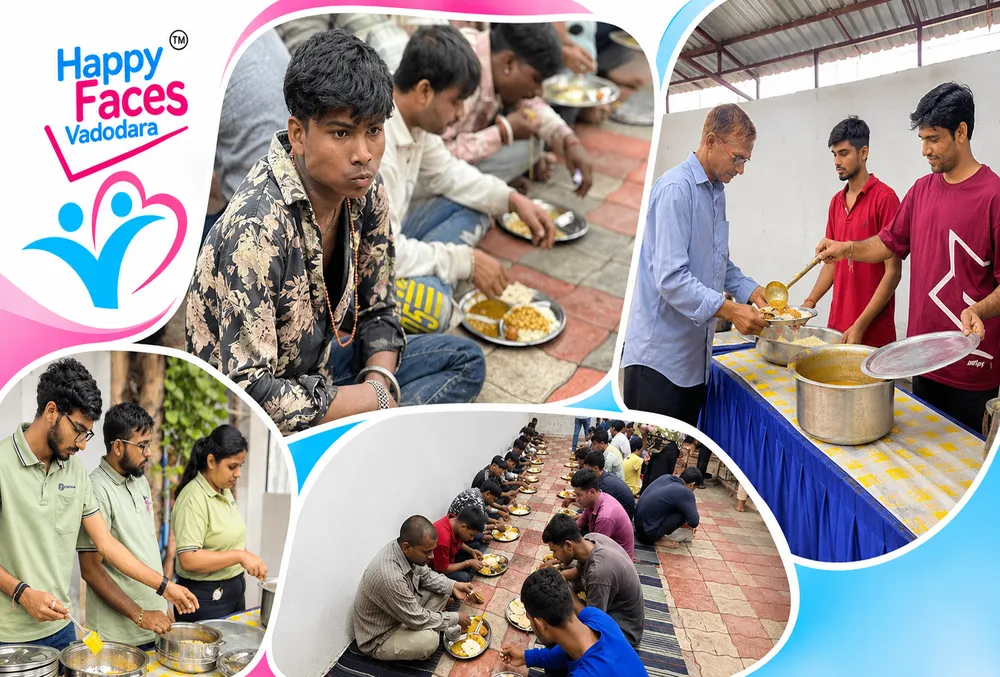
Community feeding is the process of preparing and serving ready-to-eat meals to people who may not have reliable access to food. It often takes place through community kitchens, shelters, charitable organizations, and local feeding programs.
Understanding the meaning of a community kitchen makes this concept easier to understand. A community kitchen is a place where meals are prepared and served to people in need, often with the help of volunteers and donors.
Unlike grocery donations, community feeding provides immediate access to a cooked meal. It can be particularly helpful for people who do not have a kitchen, cooking facilities, or enough resources to prepare food themselves.
Happy Faces Vadodara supports this approach through its Meena माँ Community Kitchen, which serves fresh, hygienic, and nutritious meals to people in need. The initiative reflects the belief that food support should provide not only nourishment but also care, comfort, and dignity, which is the true meaning of serving food with heart.
Food Donation vs Community Feeding: Key Differences
Both approaches help fight hunger, but their methods and benefits differ.
1. Type of Support
Food donation generally provides groceries, food supplies, or suitable surplus food. Community feeding focuses on serving prepared meals that people can eat immediately.
2. Immediate Needs
Food donations can help households manage their food supplies over several days. Community feeding is especially useful for individuals who need a meal at that moment and may not have access to cooking facilities.
3. Food Preparation
With food donations, recipients may need to prepare the food themselves. Community feeding programs take care of meal preparation and serving, making food more accessible to people who cannot cook for themselves.
4. Community Participation
Both initiatives bring people together. Food donation encourages individuals and businesses to contribute essential supplies, while community feeding often involves volunteers who help cook, organize, and serve meals.
5. Long-Term Impact
Food donation can support household food security, while regular community feeding can help people access meals consistently. Both can form part of wider community food support programs designed to address hunger and improve well-being.
Which Is Better: Food Donation or Community Feeding?
Neither approach is better in every situation. The right choice depends on the needs of the people being supported.
Food donation may be more suitable for families who have cooking facilities but struggle to afford groceries. Community feeding may be more appropriate for homeless individuals, daily wage workers, elderly people living alone, or others who need ready-to-eat meals.
In many cases, combining both approaches can make food assistance more effective. Grocery kits can support families at home, while community kitchens provide regular meals to individuals who need immediate help.
Through its food distribution activities and community kitchen, Happy Faces Vadodara demonstrates how different forms of food assistance can contribute to a shared goal: reducing hunger and helping people live with dignity.
How Can Individuals and Businesses Support These Initiatives?
Everyone can contribute to the fight against hunger, regardless of how much time or money they have.
Individuals can donate essential groceries, contribute towards meal costs, volunteer at community kitchens, or organize food collection drives. Businesses can support regular meal programs, provide financial assistance, or encourage employees to participate in volunteering activities.
Companies can also consider CSR community kitchen initiatives as part of their corporate social responsibility efforts. By partnering with a local NGO, businesses can help fund meal preparation, support food distribution, and contribute to the welfare of underserved communities.
Happy Faces Vadodara offers opportunities for individuals and corporate partners to support causes such as food distribution, Meena माँ Community Kitchen, and nutrition programs. These efforts show how collective action can make meaningful progress towards reducing hunger.
Learn how community kitchens help fight hunger by providing regular meals, supporting vulnerable families, and promoting food security.
Conclusion
Food donation and community feeding are two valuable ways to support people experiencing hunger. Food donation provides groceries and food supplies, while community feeding offers ready-to-eat meals to those who need them.
Both approaches play an important role in improving food access and supporting vulnerable communities. By donating food, sponsoring meals, volunteering, or partnering with an NGO, individuals and businesses can help make nutritious food more accessible.
Happy Faces Vadodara continues to support underserved communities through food distribution and community feeding initiatives. With more people participating in these efforts, we can work towards a community where fewer people have to worry about their next meal.
Frequently Asked Questions
What is the main difference between food donation and community feeding?
Food donation involves giving groceries, food supplies, or suitable surplus food to people in need. Community feeding involves preparing and serving ready-to-eat meals to individuals who may not have reliable access to food.
How do community kitchens help reduce hunger?
Community kitchens prepare and serve meals to people who may struggle to afford food or cook for themselves. They provide immediate food support and can help people access regular meals in a welcoming environment.
How can I contribute to feeding programs for the needy?
You can donate groceries, sponsor meals, volunteer your time, or support an NGO that runs food distribution and community feeding programs. You can also organize a food drive with your school, workplace, or local community.
How can companies support community feeding programs through CSR?
Companies can contribute funds, sponsor meals, organize employee volunteering activities, or partner with charitable organizations. These efforts can help provide meals and extend food support to underserved communities.
How does Happy Faces Vadodara support people experiencing hunger?
Happy Faces Vadodara works to reduce hunger through food distribution activities, nutrition programs, and the Meena माँ Community Kitchen. Individuals and corporate partners can support these initiatives through donations, meal sponsorships, and volunteering.
